
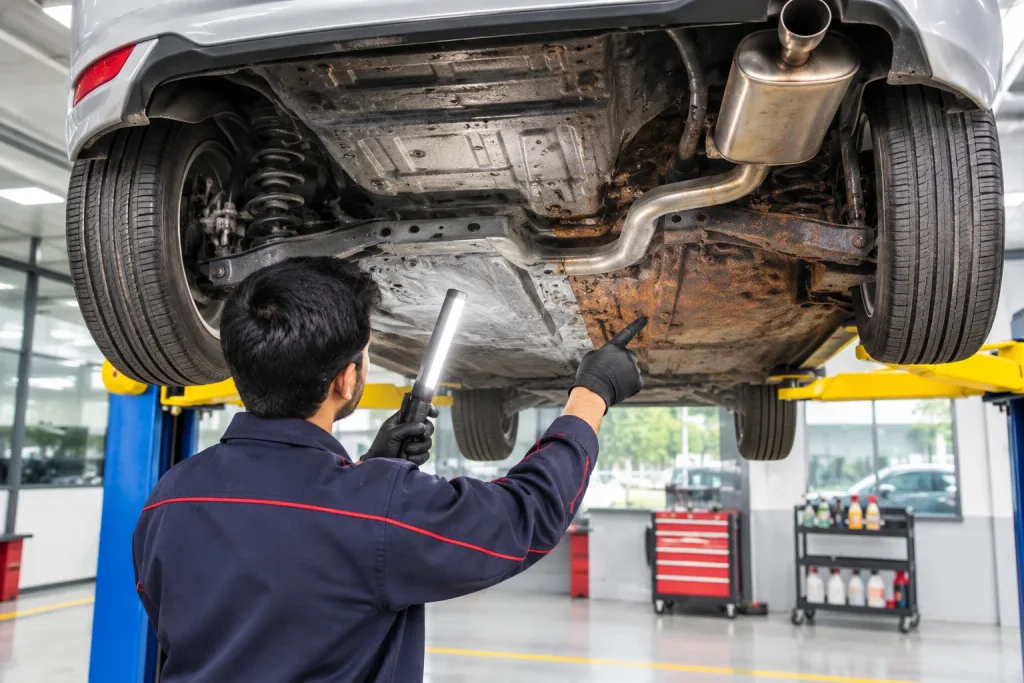
Rubberised film, wax and oil are the three treatments most owners are offered. Each is right for some situations and wrong for others, and they are not simply “good, better, best”. Here is a practical comparison for cars driven in Pakistan.
Rubberised film
What it is: a sprayed coating with rubber content that cures to a flexible, chip-resistant film on exposed surfaces.
Best at: protecting floor pans, arches and rails from stones, mud and water on a car that is driven daily.
Watch out for: it needs clean, dry metal and correct thickness; it cannot reach inside box sections; chips need touch-ups.
Wax
What it is: a soft protective wax, either sprayed on exposed surfaces or — as a thin cavity wax — injected into sills, rails and doors where it creeps along seams.
Best at: protecting enclosed sections and seams, self-healing around small chips, tolerating slightly imperfect surfaces.
Watch out for: washes off under pressure cleaning, attracts dust on exposed surfaces, needs periodic top-ups.
Oil-based treatment
What it is: a thin penetrating oil that displaces moisture and reaches tight seams.
Best at: quick, inexpensive seasonal protection and reaching places films cannot.
Watch out for: forms no durable film, drips in heat, picks up dust, needs frequent re-application and can stop future film coatings from bonding.
Head to head
| Criterion | Rubberised film | Wax | Oil |
|---|---|---|---|
| Chip resistance | High | Low–medium (self-heals) | None |
| Reaches cavities | ✕ No | Yes (cavity wax) | ✓ Yes |
| Monsoon water resistance | High once cured | Good; avoid pressure washing | Fair; washes off over time |
| Dust pick-up | Low | Medium | High |
| Maintenance | Annual check, touch-ups | Top-ups | Frequent re-application |
| Surface preparation needed | Thorough | Moderate | Light |
| Compatibility with later coatings | Good | Check datasheet | Poor — blocks bonding |
Which suits which car?
- Daily-driven car kept long-term, parked outside: rubberised film on exposed areas, cavity wax in sills and rails. The most complete combination.
- Older car with surface rust in seams and sills: treat rust first, then film plus cavity wax. Wax tolerates seams well.
- Short-term or budget protection before one monsoon: an oil or wax treatment can be reasonable if you understand it is temporary — and that it may complicate a film coating later.
- 4x4 used on gravel and northern trips: a chip-resistant film is the priority; cavity wax for the ladder frame.
Do not mix without checking
Oil under a rubberised film is the classic compatibility failure. If your car has had an oil treatment, say so at the inspection; the surface may need degreasing before any film will bond. Compatibility and safety →
Related: our undercoating service · Undercoating vs rustproofing · How pricing works
Related questions
What types of underbody coating are there?
The main families are rubberised (flexible, chip-resistant film), bitumen/asphalt-based (thick, economical, less flexible), wax-based (self-healing, often used in cavities), oil-based (penetrating, needs re-application) and polyurethane/hybrid coatings (tough, more expensive). Each has trade-offs in durability, flexibility, drying time and how easy later inspection is. We explain which product we propose for your car and why, and you can see its datasheet.
What is cavity wax and do I need it as well?
Cavity wax is a thin, creeping protective wax injected into enclosed box sections — sills, chassis rails, door bottoms — where sprayed underbody coating cannot reach. Rust often starts inside these hidden sections. Whether you need it depends on the car’s age, drain condition and what the inspection shows; it is a separate step from the exposed-underside coating.
When should undercoating be reapplied?
When an inspection shows thinning, chipping, cracking or lifting — not on a fixed calendar. Oil-based treatments typically need more frequent top-ups than film coatings. Annual checks catch problems while a small touch-up is enough.
Ready to protect your car’s underside?
Book an underbody inspection. We look first, explain what we find, and only then quote — no pressure, no guesswork.