
If you remember one thing about undercoating, make it this: the coating is only as good as the surface it is sprayed onto. Preparation is slow, unglamorous and invisible in the finished job — which is exactly why cheap providers skip it. Here is what proper preparation involves and why each part matters.
Why preparation decides the outcome
Coating bonds to the first surface it touches. On clean, dry metal that is the steel. On mud, oil film, loose rust or a failing old layer, the coating bonds to the contaminant — and when the contaminant lets go, so does the coating. Worse, a film over damp or dirty metal traps moisture against the steel and hides it.
The preparation sequence
1. Inspection first
Before cleaning, we look: it is easier to see leaks, previous repairs and the pattern of mud build-up before everything is washed. What the inspection covers →
2. Washing
Mud, dust and road film are washed off with attention to arch lips, seams, jacking points and the area around suspension mounts, where mud compacts. On a Lahore daily driver after the monsoon this can be a substantial job in itself.
3. Degreasing
Oil and grease around the engine sump, gearbox, drive shafts and any leaks are removed with a suitable degreaser. Coating will not bond to oil film, and oil-based old treatments must be cleaned off before any film coating.
4. Removing loose rust and failing coating
Loose scale and flaking rust are removed mechanically. Old undercoat that is cracked or lifting comes off wherever it is loose; what remains must be sound and compatible with the new product. This is where a “quick spray” job and a proper job diverge completely.
5. Rust treatment
Surface rust is treated or primed per the product datasheet, with reaction and drying times respected. Structural rust is referred for repair. How we assess and treat rust →
6. Drying — properly
The least visible step and the one most often rushed. Seams, flanges and box sections hold water long after flat surfaces look dry. In Lahore’s humidity, drying needs time and airflow, and coating before the metal is truly dry is the most common cause of early lifting.
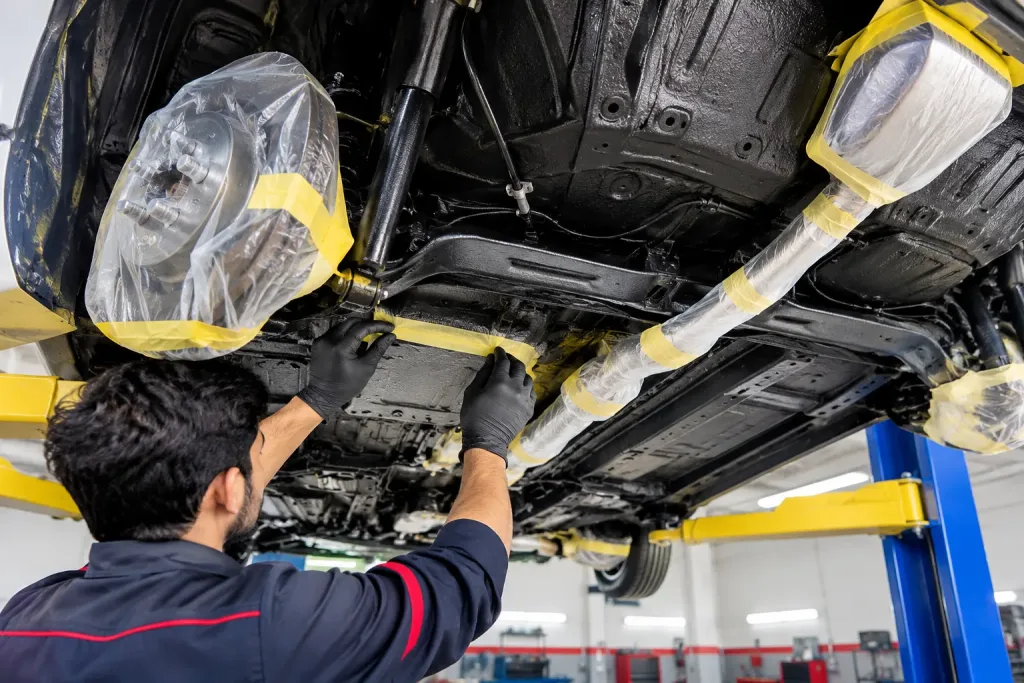
7. Masking
Exhaust, brakes, sensors, drive shafts, bushings, drain holes and manufacturer exclusions are masked or kept clear. What must never be coated →
How to tell a provider takes preparation seriously
- They want the car for long enough to dry it, not “ready in an hour”.
- They show you the cleaned, bare underside before coating (photos or on the lift).
- They talk about degreasing and old-coating removal without being asked.
- They explain drying and curing times from the product datasheet.
Can you prepare the car yourself?
A thorough rinse of the underside before your appointment helps and shortens the cleaning stage. Degreasing, rust removal and drying are better left to the workshop — and we wash the car anyway, because we need to know it is clean.
Related: the six-step process · How long does undercoating last? · our undercoating service
Related questions
Why is cleaning the underbody so important before coating?
Coating sticks to whatever is underneath it. If that is mud, oil film or loose rust, the coating bonds to the dirt, not the metal, and lifts off within months — sometimes trapping moisture against the steel and making corrosion worse. Washing, degreasing and thorough drying are not optional steps.
Can new coating go over an old underbody coating?
Only if the old layer is sound, clean and compatible with the new product. Flaking or lifting old coating must be removed first, otherwise the new layer fails with it. Mixing incompatible chemistries (for example some oils under rubberised products) can stop the new coating from bonding — we check compatibility against the datasheet.
How long does the service take?
It depends on the vehicle size, how dirty the underside is and whether rust treatment is needed. Cleaning, drying, masking and applying the coating in proper passes cannot be rushed, and the product needs its specified drying time before the car is driven. We give you a realistic time estimate at the inspection rather than a one-size-fits-all promise.
Ready to protect your car’s underside?
Book an underbody inspection. We look first, explain what we find, and only then quote — no pressure, no guesswork.